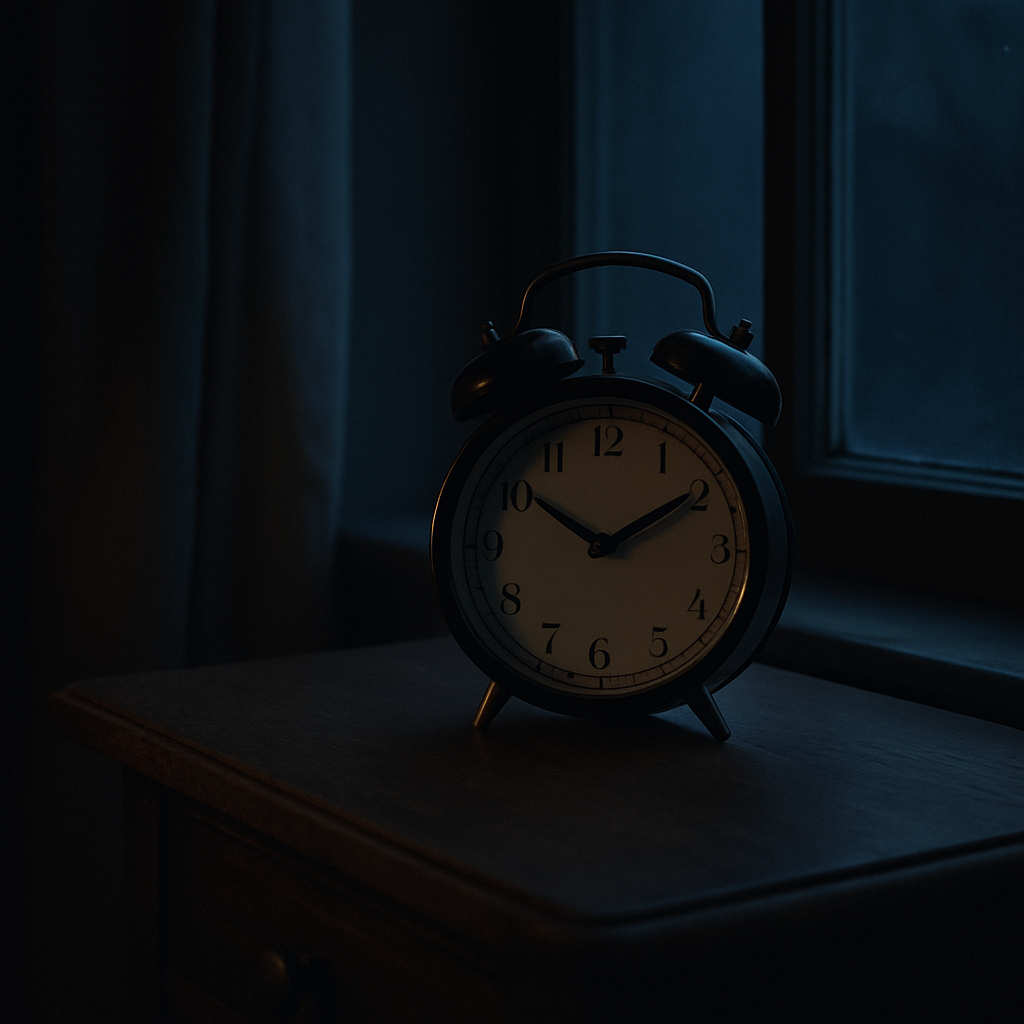
TIME CHANGE – Why doesn't the hour seem...
or changing time with peace and understanding (Not only) for us, women 50+
And here it is again!
The annual game, when we are told about one of the Sunday nights will move time and it doesn't matter which way – whether it's winter, when we "catch up" in the fall, or summer, which steals a precious hour of sleep. I know that for many of us, who have already done something and our bodies have been searching for their peaceful rhythm for years, it's sometimes just hell. Honestly, for a long time I didn't understand what was happening, that after such a change – even though I was supposed to get more sleep – I was suddenly tired, irritable, and lacked concentration? Well, let me look here.
When you understand this, you will be relieved – really.
The body often tells us more than the mind allows us to hear.
When I was younger, I didn't think about it that much. But with age, it seems like the sensitivity has increased. And what did I find out? It's not just in my head! Our inner, so-called circadian rhythmic clock, it doesn't work like an alarm clock hand that you can easily move. It takes our bodies weeks to adjust to that shift.
And one important thing plays a key role in this: LIGHT!
Morning and midday light
- Color: Bluer
- Reason: At noon, the sun is high in the sky, the sun's rays pass through the atmosphere less, and short-wave blue light is scattered less than long-wave light.
- Effect on the body: Increases alertness and performance.
Evening light
- Color: Orange and red
- Reason: The sun is low above the horizon, the rays pass through a thicker layer of the atmosphere. Long-wave, red and orange light scatters less and penetrates us more easily.
- Effect on the body: It signals the body that night is approaching, reduces melatonin production, promotes sleep and contributes to relaxation.
When this rhythm is disrupted, our body is confused. You feel tired during the day, but you have trouble falling asleep at night. And this then leads to classic problems – poor concentration, irritation, reduced performance. And these impacts are unexpectedly large. It is no wonder that during the time change the number of car accidents even increases and we are even more susceptible to infections. And I don't give a damn about this!

Winter, or standard time, is more natural – and that's a fact
Do you know what's interesting? Summer time was originally introduced in our country in 1979 because of reduction of electricity consumption. But later research showed that the savings were minimal. But the health impacts... they are huge!
Experts agree that from a medical point of view, winter, or standard time, is healthier for us. Why?
- Morning light! Under standard time, the dawn breaks earlier, which is more in line with our natural rhythm. We wake up at dawn.
- If we had permanent daylight saving time, the sun wouldn't rise until around 9 a.m. in the winter. Most of us would be forced to get up and start work in the dark. – Which is to be expected – most of us get up in the dark even in the summer!
And this reduces our performance and concentration - and in the long term it can also lead to a greater risk of civilization diseases. Indeed, permanent adherence to standard time has the greatest health benefits, according to studies. In the USA, it is even estimated that maintaining standard time could prevent hundreds of thousands of strokes and millions of cases of obesity every year. And organizations such as the American Medical Association are also advocates of permanent standard time!
Winter and summer time does not have a single creator, but its introduction has multiple originators and historical phases. British architect William Willett In 1907, he first proposed daylight saving time in detail to make better use of daylight. On April 24, 1916, daylight saving time was first introduced in Germany and subsequently in other countries, including Austria-Hungary, during World War I to save energy.
No need to change anything – just understand
First of all, we don't have to protest and call for a change in the laws right now. But the fact that we understand a little bit, why we feel, how we feel, is the greatest gift.
What did I take away from delving deeper into this topic? A few simple things that help me get through it, although the transition is more challenging for those of us who are more sensitive (and this also applies to seniors and women who have had a short-term increased risk of miscarriage):
- Relaxation in the first days: Experts advise me (and this is very good advice) to spend the first few days relaxing. Let your body adjust and not try to "catch up" on everything right away.
- Light, light, light: As soon as I wake up, I try to expose myself to bright light as soon as possible – Morning light, even artificial light, is the strongest signal for our internal clock.
- Dark evening: Conversely, limit the blue light from screens and TV in the evening. I'll just grab a book and a retro orange light bulb - no bluish bright white LED light! Dimmed lighting gives your body a signal that it's time to calm down. And it's autumn, so candles are a clear choice in the bedroom 😍
- Vitamins for energy: I have found that increasing my intake of vitamins and minerals (such as magnesium, B6, B12, vitamin C and iron) has helped me helps reduce fatigue and exhaustion.
A little „aha moment“ at the end:
The time change alters our homeostasis – the body’s natural attempt to maintain balance. And that costs us energy. So it’s perfectly normal and understandable to feel tired and run down.
Let it go. Don't push the saw. And remember: You are intelligent beings who just need time – more time to adapt. And that's okay.
These 3 steps serve to minimize the internal chaos caused by the time shift and the absence of morning light, which is crucial for proper alignment.

1. 📢 Aggressive light shock (Even if artificial)
Since the sun doesn't rise at 5:00, we need to give our bodies replacement and clear signal.
- Alarm clock + Bright light = One whole: Learn that setting an alarm and immediate lighting of the strongest possible light are one ritual. Bright light is a powerful signal that regulates circadian rhythms and helps suppress melatonin, signaling the body that the day has begun.
- LEDs are your friend: Replace the main bulb with the most powerful one possible. LED light in cool tone (white/bluish). Blue and white spectrum is more effective at suppressing melatonin than warm yellow light. Just This will help the body switch from zero to one.
2. ⏳ Pre-treatment (Step-by-step)
This is the most important thing when you know that the day D will come.
- Micro-shift (15 minutes): Because jumping an hour is too sudden a change, try 4 days ago to gradually shift the time by changing the time (whether in spring or autumn), when you go to bed and when you wake up, by 15 minutes a day. This helps the body adapt more smoothly.
- Example of autumn change (when the clock goes back, i.e. you would wake up an hour earlier on Sunday than on Monday): You normally wake up at 5:00 a.m. Start setting your alarm for 4:45 a.m. Then 4:30 a.m. By Sunday, your body will be „pre-set.“.
- Dinner shift: At the same time as you shift your sleep schedule, shift your dinner and evening habits. The body is used to consistency.
3. 🛡️ Nighttime sleep protection (Melatonin on command)
Because the morning signal is weak, the evening signal must be strong and uncompromising.
- Darkness without blue light: At least 60 minutes before bedtime Limit your exposure to blue light from screens. Blue light suppresses the production of melatonin, which you need for quality sleep. Dim lighting (retro yellow-orange bulbs and candles) helps the body understand that it is time to calm down and prepare for sleep..
- No caffeine and relaxation: Caffeine, alcohol, and heavy meals before bed are all bad during jet lag – when the body is already prone to sleep problems – big NO. Instead, spend the last 20 minutes doing relaxing activities like reading.
Once you understand this, you will feel relieved – really. There is no need to change anything about how you wake up, but you just need to understand that you have to deliver those signals to your body purposefully and artificially when the Sun doesn't provide them at 5:00 AM.

With love, Daniela
Note for our readers: Some of the links in our articles may be affiliate links (but definitely not all of them!). That means if you buy something through them, we may receive a small commission – at no extra cost to you! 💛 These little rewards help us keep the blog running: covering hosting, tools, and most importantly – the time and love we put into creating meaningful content for you. Thank you for supporting us. Every click is a sign that what we do matters.


You might also like

The 100 healthiest foods – and lard too!
And this is what you do? How are you unnecessarily shortening your life?