Samhain, Halloween and All Souls' Day - Autumn Magic
Old rituals, candlelight, autumn peace and transformation.
It is a moment when time slows down. In the soul and in nature.
When the days get shorter and the air smells of wood and apples, a season comes that carries a special magic.
At the turn of October and November, the visible and invisible worlds connect - a time when the old stories and rituals of our ancestors come to life.
Whatever we call it Samhain, Halloween, All Saints' Day or All Souls' Day, at its core it's about the same thing: about remembrance, about peace, about honoring the cycle of life.
When candlelight reminds us that even darkness has its meaning – that endings are just another form of beginnings.
Samhain – the Celtic gateway between the worlds
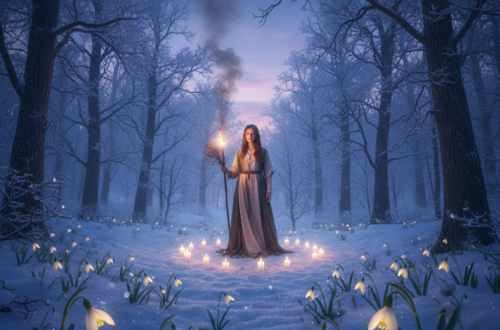
The night from October 31 to November 1 was sacred to the Celts.
They called it Samhain – the festival of the round of the year – of fire, purification and rebirth..
It was the pagan New Year – the end of the harvest, the farewell to summer and the entrance to the dark half of the year.
It was believed that on this very night The veil between the world of the living and the dead is thinning..
The souls of the dead can return home and the living can peer behind the curtain of time.
It was not fear, but reverence—a reminder that death is just another form of being.
When the Romans conquered the Celtic lands, their traditions became intertwined –
joined the Samhain festival harvest festival: apples, grain, summer fruits.
People thanked the earth and lit fires to cleanse and protect it.
Masks and protection from ghosts
Samhain It was a night when light and darkness touched – and people felt it.
They wore masks, animal skins, and painted their faces to they confused the evil spirits.
They believed that if spirits did not recognize who was alive, they won't take him with them.
So the masks were protection, not play. They were meant to confuse, blend into the night, and maintain balance.
From these rituals, the modern Halloween – originally All Hallows' Eve, that is, All Saints' Eve.
The mystical ceremony became a joyful celebration, but the roots remained the same:
a reminder of death, light, laughter and the return of souls.

Purification and divination
Samhain also included cleansing fires and small personal rituals.
People wrote on pieces of parchment what they wanted to get rid of – old hurts, bad habits, fears – and threw them into the fire.
It was a ritual of release and a new beginning. We'll even have candles!
Young couples put two hazelnuts into the fire –
If they burned peacefully next to each other, it meant the relationship was blessed; if they burst, it was not destined to last.
They also threw themselves into the ashes stones for fortune telling,
and their arrangement after the fire was extinguished was read as an omen of the coming year.
Halloween from beets to pumpkins – the legend of Jack
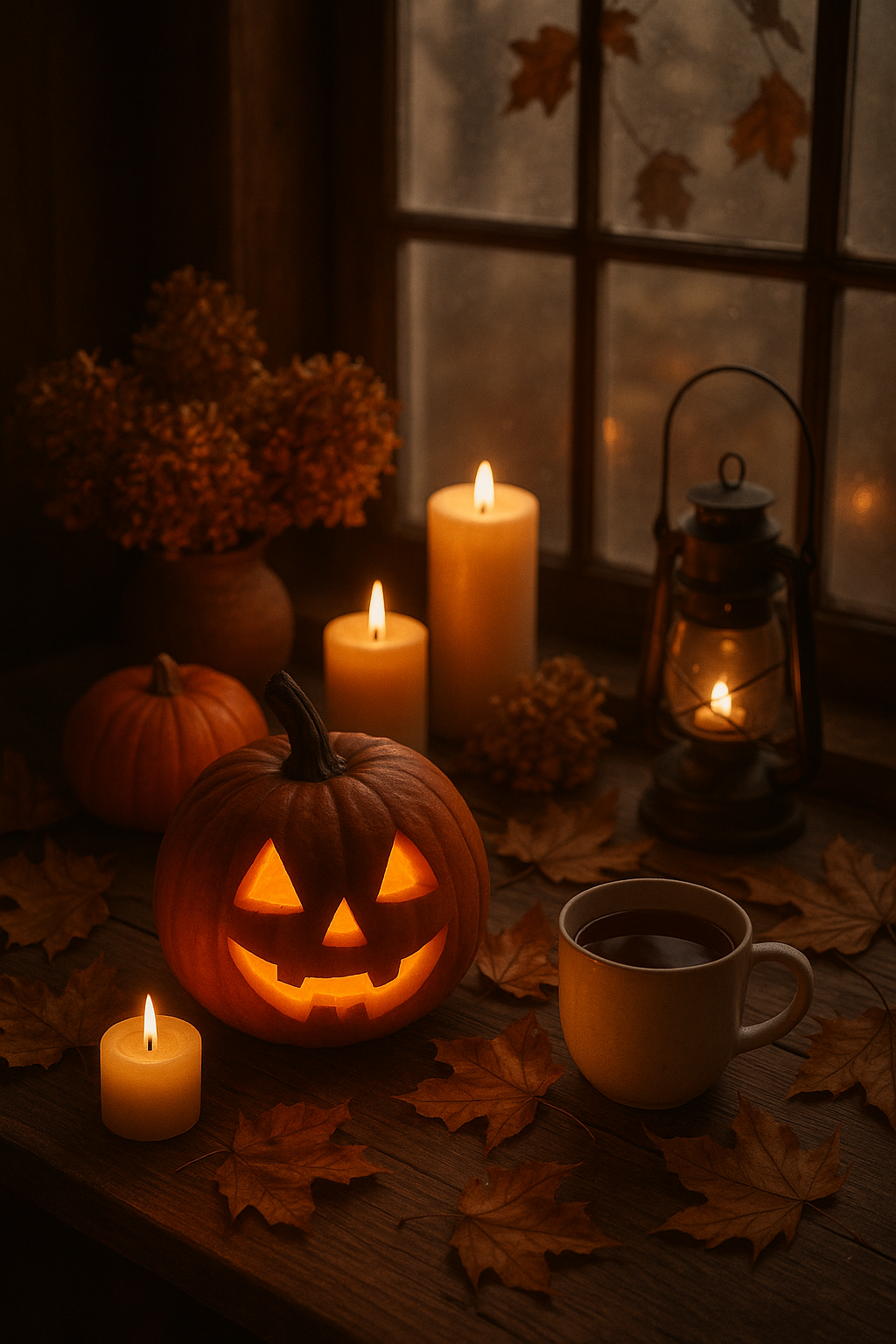
Carved lanterns, known today as Jack O'Lantern, originated from an ancient Irish legend.
It tells the story of Jack, a clever villain who outsmarted the devil himself.
However, after death he could not go to heaven or hell, so he wandered the earth with a coal from hellfire, which he placed in a hollowed-out beet.
This symbol was also carried over to the new world –
Irish immigrants in America swapped beets for pumpkins, which are easier to carve.
And so a tradition was born - Halloween, which lights up our windows and hearts today.
Jack-o'-lantern: the legend of Jack
Once upon a time in Ireland there lived a drunkard and prankster named Jack. He did all sorts of mischief, but most of all he drank a lot. One day, on the eve of All Saints' Day, he got so terribly drunk that his soul slowly left him and the devil came from hell to get him.
But Jack woke up and didn't want to die yet, so he started to bargain with the devil. He asked the devil for 6 pence for a beer.
But the devil had no money, so Jack suggested that he turn himself into coins. The devil thought that if he did what Jack asked, he would be able to quickly return to hell, so he cast a spell and money appeared instead of the devil. Jack bought a beer for five pence, hid the sixth coin in his wallet, so the devil could not turn back. In exchange for his freedom, the devil promised Jack one more year in the world.
But Jack did not improve, on the contrary, he drank even more. So a year later the devil came for him again. He was furious because he had gotten a good deal in hell. But Jack outwitted him again. When the devil climbed a tree to get a pear, he carved the sign of the cross into the bark of the tree. The devil could not come down. In exchange for his freedom, Jack made a deal with him that he would never be accepted into hell.
Jack did not improve again. And so it did not take long before he really died. His soul went to heaven after death. But, wonder of the world, they did not let Jack's soul into heaven. So Jack wanted to go to hell at least, but that has its own principles and could not break the agreement that he would never be accepted. Jack's soul was condemned to wander in darkness. The devil at least gave Jack a hot coal to light his way.
Since then, people have been putting candles and embers in pumpkins. They are for Jack, so that his soul does not wander in the dark and can at least warm up a little. They also believe that if they put a candle in his pumpkin, he will protect their home from evil spirits.
Romans, flowers and eternity
Already ancient Romans they laid flowers on the graves.
The rose signified rebirth, while pines and yews symbolized the immortality of the soul.
The Celts planted periwinkle, violet, and comfrey on graves – herbs of life and death.
And the smell old age, which still accompanies funeral ceremonies today, is said to soothe sadness and bring peace.
These customs have survived the ages.
In every candle flame, in every flower on the grave, the message still lives on - that the soul never completely leaves.
All Saints' Day
November 1
It is a Christian holiday when all saints are venerated. – not only the well-known ones (like St. Peter, St. Anne...), but also the "unknown" ones who lived holy lives but were not officially canonized.
💬 Essentially, it is a "celebratory day of light" — a celebration of goodness, faith, and all those who have dedicated their lives to God.
In the Catholic tradition it is celebration – people go to church, light candles, pray. Most people confuse it with All Souls' Day 😏
Memorial of the deceased – All Souls' Day
November 2 The day after All Saints' Day – spiritually „calmer“, it is dedicated to our deceased loved ones.
We light candles, clean graves, and silently remember.
This Christian holiday has deep roots in the pagan rites of Samhain.
It was introduced by Pope Gregory III in the 8th century as a day of prayer for the dead, but in reality it follows on from a thousands-year-old tradition of ancestor worship.
In the past, tables were also set for the deceased, lights were left burning in the house, and there was butter in the lamps for the souls, who were supposed to use it to treat their pain.
When it rained, it was said that souls wept for their sins.
The home was meant to be quiet and peaceful – a place where souls could feel welcome.
A little ritual for you
On the last evening of October, make yourself a hot tea – perhaps with apple and cinnamon.
You light a candle, take a piece of paper and write down everything you want to leave behind.
Old fears, grievances, fatigue, doubts.
Then you burn the paper in the flame – consciously, with gratitude.
Watch it turn to ash – your past turning into space for something new.
Then write down what you are grateful for.
Keep that paper. It's your talisman - proof that light and gratitude will always triumph over darkness.
Four faces of one story...
Samhain, Halloween, All Saints' Day and All Souls' Day
four different faces of one ancient story.
About life, death, transformation, love and return.
Autumn reminds us that everything has its time – and that even goodbyes can be beautiful.
When we light a candle, we feel that the light never goes out.
It just changed shape/form
Let it shine – for us, for those who were, and for those who are yet to come.
Because darkness is not the end.
It's the beginning. 🕯️
💡 Interesting fact:
The Church intentionally placed „All Saints“ Day„ on the day after Samhain to “overlap” the pagan holiday — so all three days are actually the same spiritual process:
darkness (Halloween) → light (All Saints' Day) → peace (All Souls' Day).

With love, Daniela
Note for our readers: Some of the links in our articles may be affiliate links (but definitely not all of them!). That means if you buy something through them, we may receive a small commission – at no extra cost to you! 💛 These little rewards help us keep the blog running: covering hosting, tools, and most importantly – the time and love we put into creating meaningful content for you. Thank you for supporting us. Every click is a sign that what we do matters.


You might also like

Secrets of the Night Sky: Shooting Stars
Advent 2025: A time of hope, light and beautiful traditions