Aging doesn't come slowly. It comes in waves...
And when I read it, I stopped looking at myself as a woman who was "doing something wrong.".
We've been told our whole lives that aging is a gradual process.
Slowly, inconspicuously, year after year. But a new study shows something completely different – we don't age linearly. Aging comes in two distinct waves. The first around the age of forty-four. The second around the age of sixty. .
Maybe you remember your forty-fourth birthday. And maybe you just felt back then that your body was reacting differently. That it was harder to lose weight. Also, wine stays in your head longer. That the fatigue wasn't just from work, but somehow deeper. I remember it very well. I didn't drink, no wild nights out. And yet I started to gain weight. Not dramatically. But persistently. And the more I pushed, the more my body resisted.
According to Stanford scientists, around the age of 44, there are significant changes in metabolism. Molecules related to the processing of fats, alcohol, caffeine, and the structure of connective tissue change. This means that the body suddenly reacts differently to the same conditions. It's not a matter of weak will. It's biology.
And that is a relief. And at the same time a challenge.

The first wave: when the body changes the rules
According to the study, at the age of 44, it's not just the number on your ID card that changes. The way the body manages energy changes. Fat tissue proteins behave differently, cholesterol can start to increase, muscle mass slowly decreases. And we often solve this with diet. Restriction. Pressure.
But pressure is often the problem.
I noticed one thing – the more I focused on my weight, the worse I slept. And the worse I slept, the more my body held onto its reserves. Sleep and stress are much more important at this age than we ever realized. If I don’t sleep, I gain weight. If I’m stressed for a long time, my metabolism slows down. The body conserves energy.
And we've been used to performance all our lives.
After fifty, we have jobs, responsibilities, sometimes even grandchildren. Children no longer need us every day, but the world still needs us a lot. And we want to be healthy. Not just slim.
Maybe that's why the first wave is a warning. Not a punishment.

The second wave: around sixty, it's about more than just weight!
The second significant change, according to research, comes around the age of 60. It's not just about metabolism. There are significant changes in molecules associated with the immune system and kidney function. Susceptibility to infections, inflammation, and cardiovascular problems increases. .
And here I realized something important. I don't want to be thin at all costs. I want to be strong.
Because today I might be able to lift my grandchild without any problems. But what about in ten years? What if I lack muscles, stability, leg strength? Studies talk about molecules, but in practice we see it differently – in how easily we get up from the ground. How firm our step is. How we heal after an injury.
I have an ankle surgery. Squatting is no longer as natural as it used to be. And I'm sorry, because squatting is one of the most complex movements – it involves the legs, core, metabolism. But even with limitations, you can find a way. It's not about perfection. It's about functionality.
And it is functional strength that is crucial in the context of the second wave.
What does the research actually tell us?
That aging is not a smooth descent. It's a transition between phases. And each wave gives us a chance to adjust something.
Around 44…
It is crucial to accept that the body reacts differently. Instead of drastic diets, it makes sense to have a more balanced diet – more vegetables, enough protein, less extremes. Don't forbid yourself. Don't make food another source of stress.
Around 60…
It's important to think about muscles. Leg muscles, core, back. Even grip strength is showing up as one of the indicators of overall vitality and the rate of aging. This is no longer aesthetics. This is longevity.
And here I will allow myself a personal remark – we may have a belly. Not all of us are lucky enough to have a thin waist. But if we sleep well, have energy, can carry the shopping and the grandchild, and feel stable in our bodies, we may have won more than we think.
Aging as a conscious phase, not as a failure
That study actually brought me peace. Because when you know that changes come in waves, you stop blaming yourself. You stop thinking that you lost discipline. That you gave in. NO! …It was just the body moving on to the next chapter.
And we can cooperate with him. Not with force. Not with extremes. But with reason, kindness, and a little strength – yes, even with a dumbbell in hand.
Because we don't just want to survive. We want to live. And ideally, so that we can withstand the next wave.
Look, my hip doesn't hurt, I don't drink alcohol, I quit smoking and that was a real struggle! (but more on that later)... but I started gaining weight! I'm struggling, but it's not going well. That sleep and no stress are important. Living for joy, focusing more on ourselves - yes, we have a job, but no more children. Maybe grandchildren. And it's because of them that we want to be healthy!
It requires a better, more balanced diet. Yes, more vegetables, but don't forbid yourself, don't make it a stress. Nothing for strength. For strength, maybe just dumbbells - or exercises with your own weight. After all, I want to lift the grandchildren. It may still be possible today, but what then? In a few years?
The muscles of the legs and core are the alpha and omega for us. And as I recently discovered, the strength of the grip also determines how much and how quickly we will age and deteriorate. And I don't want that. Nobody wants that!
Yes, I/we have that belly – except for a few lucky women who don't… But whatever. Strength, health, satisfaction and good sleep are above all else.
Maybe some of us already have certain limitations. Yes, I do too – ankle after surgery. I won’t do a squat. And I have to say that I’m sorry, because the squat is one of the best and most complex exercises. Not only does it help with weight loss, but it strengthens the muscles of almost the entire body! And let’s not forget about the excellent and neglected walking! See the article – Why is walking better than running for women 50+?
Finally, I'm adding the top 5 most complex exercises, all of which you probably know - but you may be missing information about how important they are for you.
Top 5 most complex exercises for strength and vitality
Complex (multi-joint) Exercises are the foundation of effective training. They engage multiple muscle groups simultaneously, leading to a higher hormonal response, more efficient fat burning, and building functional strength essential for longevity.
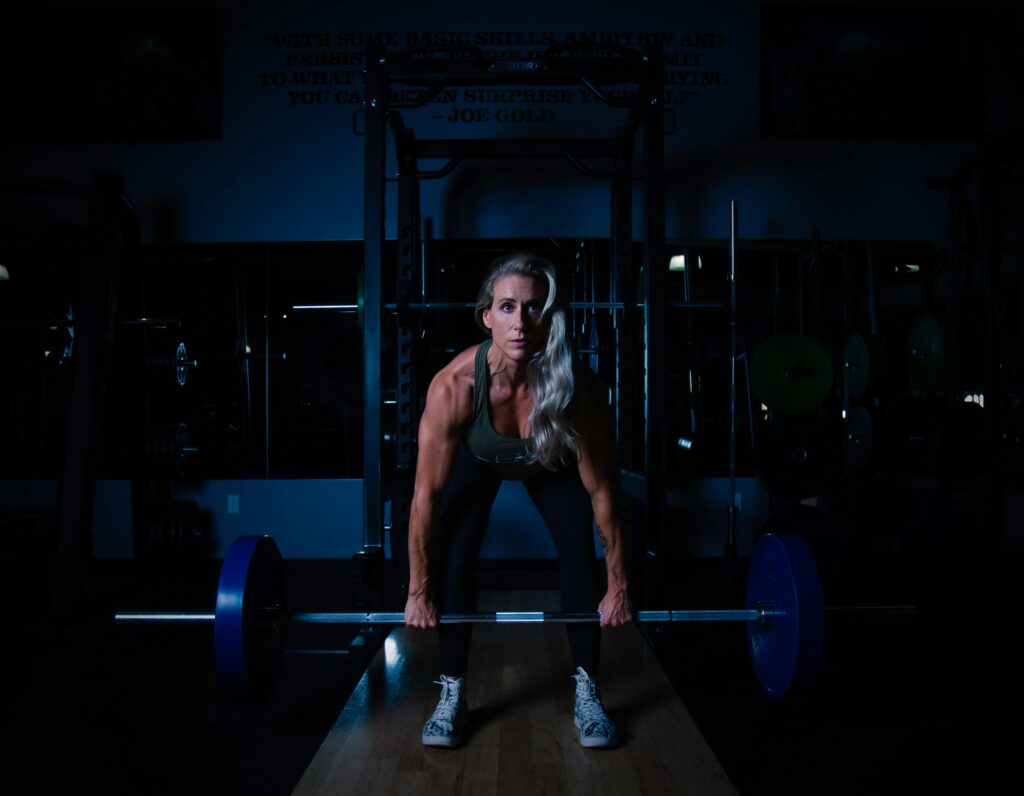
1. Deadlift
This exercise is considered the absolute king of strength training because it activates the largest amount of muscle mass in a single movement.
- Muscles involved: The entire posterior chain – the erector spinae, glutes, hamstrings, but also the trapezius and forearm muscles (grip).
- Advantages: Significantly increases bone density and core strength. From a calorie burning perspective, this is the most energy-intensive exercise, which speeds up metabolism for hours after training.
- Force: It builds the absolute strength needed for common daily tasks (lifting weights).
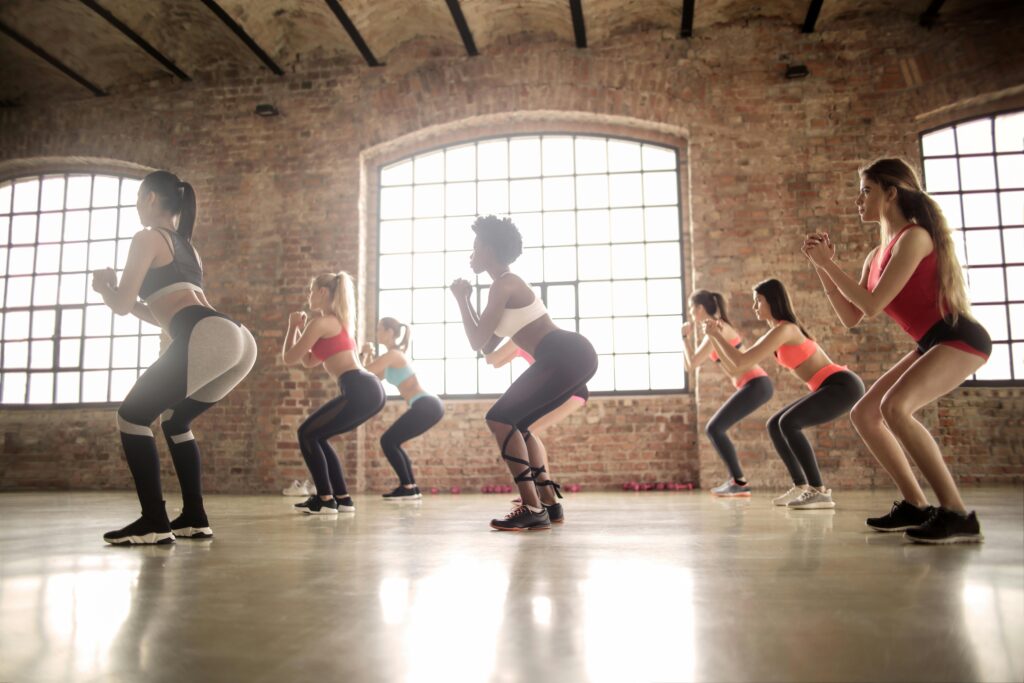
2. Squat
A basic movement pattern that is key to maintaining mobility and independence even in old age.
- Muscles involved: Quadriceps (front of thighs), glutes, hamstrings and deep stabilization system.
- Advantages: Improves hip and knee stability. Squats stimulate the production of growth hormone, which is essential for tissue regeneration and anti-aging processes.
- Combustion: The large volume of involved lower limb muscles means high energy expenditure.
3. Push-ups / Pull-downs
A key exercise for the vertical pull that balances muscle imbalances caused by a sedentary lifestyle.
- Muscles involved: Latissimus dorsi, interscapular muscles, rear delts and biceps.
- Advantages: It improves posture and "opens" the chest. A strong back prevents chronic pain in the cervical and thoracic spine.
- Building: It shapes the figure into a "V" shape, which visually narrows the waist and builds a firm upper body.
4. Bench press / Push-ups
A basic upper body press exercise, focused on developing chest and arm strength.
- Muscles involved: Pectoralis major, front of shoulders (deltas) and triceps.
- Advantages: It builds push-up strength, which is important for overall fitness. Additionally, push-ups require strong activation of the abdominal muscles to maintain a straight body line.
- Force: It increases strength in the upper body, which often weakens faster than leg muscles with age.
5. Lunges
A unilateral (one-sided) exercise that reveals and corrects muscle imbalances between the left and right sides of the body.
- Muscles involved: Glutes, quadriceps, hamstrings and internal pelvic stabilizers.
- Advantages: Extreme demand for stability and balance (proprioception), which is key to preventing falls and injuries.
- Combustion: The constant need to balance increases the heart rate and the demand on the nervous system, which leads to high caloric expenditure.
„Growing old is not an art, it is an art to endure it.“ — Goethe
„"Old age is stupid, but it's the last chance to survive." — Jan Werich
„Aging is not caused by age, but by the abandonment of ideals.“ — Karolína Svetlá
„Old age, when strong, does not bend, frost does not burn the deep roots.“ — JRR Tolkien
„Forty is the age of youth, and fifty is the youth of old age.“ Victor Hugo

With love, Daniela
Note for our readers: Some of the links in our articles may be affiliate links (but definitely not all of them!). That means if you buy something through them, we may receive a small commission – at no extra cost to you! 💛 These little rewards help us keep the blog running: covering hosting, tools, and most importantly – the time and love we put into creating meaningful content for you. Thank you for supporting us. Every click is a sign that what we do matters.


You might also like
Teeth after fifty: How to maintain a beautiful smile ;)
Serotonin coat against winter sleet: