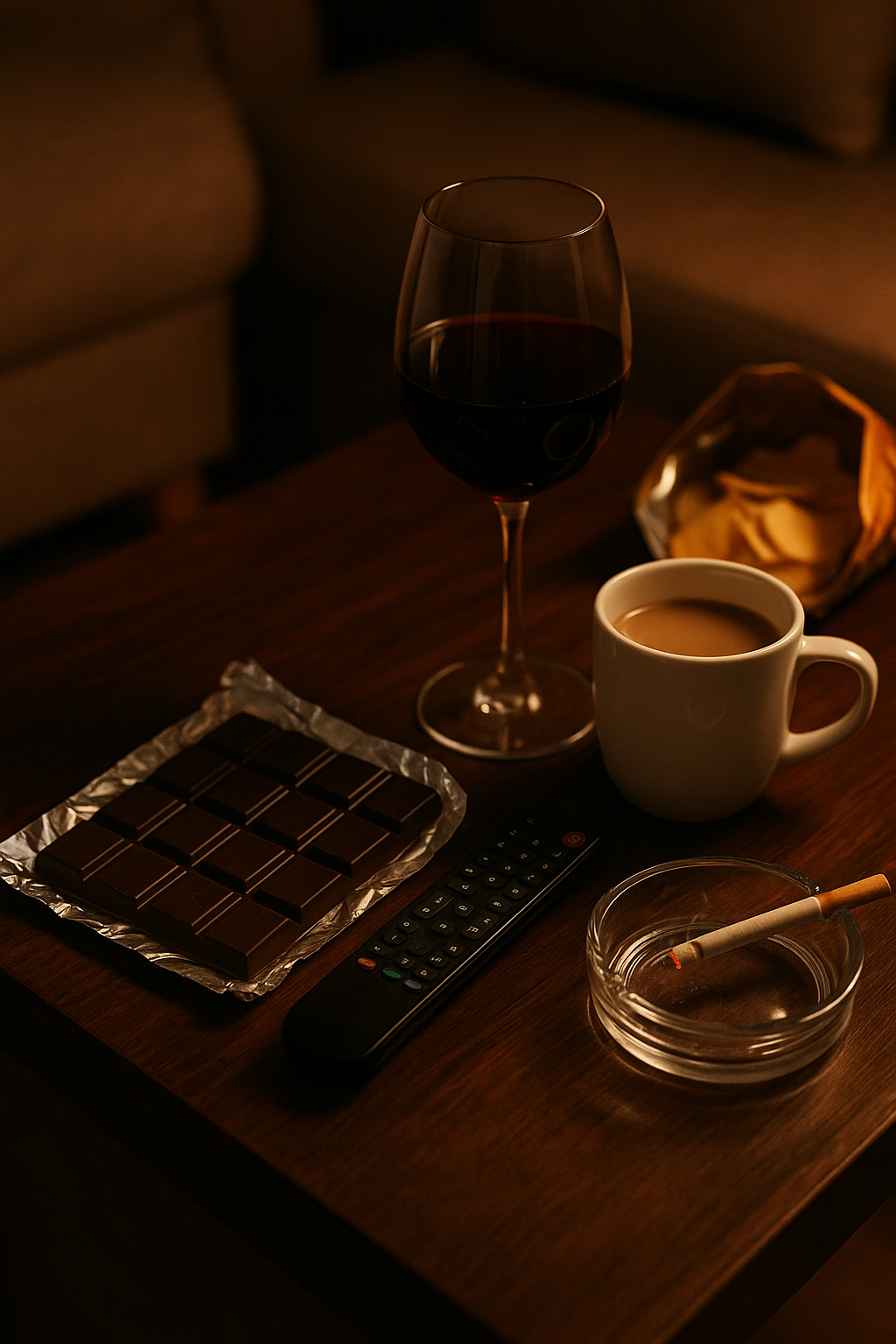
The power of habit/bad habit in the life of a woman 50+
And this is exactly what the book "The Power of Habit" by Charles Duhigg focuses on.
How to take control into your own hands
Do you remember the last time you consciously decided what to wear in the morning? How long does it take you to instinctively reach for the same cup of coffee? How natural does it become for you to head to the coffee shop after work instead of the gym? You probably don't even realize that you're automatically controlling your life with this behavior!
Why does someone change overnight while another struggles for years?
You may know the feeling. You've promised yourself a thousand times to start exercising, eat healthier, or wake up earlier. And you've failed a thousand times. It's not because you lack the willpower. It's not because you've forgotten. The problem is that you don't know the rules of the game. In this brilliantly written and readable book, Charles Duhigg reveals the secret: all our habits work on one principle. If you understand it, you can change anything.
The Three-Step Secret: How Do Our Habits Work?
Every habit—no matter how complex or simple—follows one basic pattern. Charles Duhigg calls it the habit loop, and it consists of three essential steps:
Step 1: Trigger (cue) – What will get you into action
A trigger is a specific signal that leads you to take a certain action. It can be a time, place, feeling, person, or situation.
For example, if a long-time girlfriend asks you: „"Come on, let's go for coffee?"“, a chain of automatic actions is triggered within us. Or when you wake up at 6:30 in the morning and head to the refrigerator without thinking.
The trigger is not a matter of will – it is a kind of bell that rings.
How to see it in practice:
Observe yourself for the next three days. When you have a craving for something sweet, figure out what preceded it. Was it time? Boredom? Frustration? Energy after coffee? Map out your triggers like a detective.
Step 2: Routine – Automatic Response
After the trigger is triggered, comes the routine. This is the behavior itself – physical or mental action.
When your girlfriend invites you for coffee, you respond. When you crave something sweet, you open the fridge.
Routine is what we want to change – it is the behavior we want to replace, improve, or completely change.
For women 50+, this often includes smoking, overeating, neglecting exercise, negative self-talk, or spending money.
Routine is not a moral issue. It is not a sign of weakness. It is simply a learned path that the brain follows without thinking.
How to see it in practice:
Once you know your trigger, notice exactly what you're doing. Don't judge yourself, just write. A candy from the cupboard? A phone call to a friend? Sitting on the couch with your phone? That's exactly what your routine is.
Step 3: Reward – Why we do all this
Here lies the golden key. Every habit rewards us with something. Without a reward, the habit would not exist.
When we eat sweets, we get an energy boost and a small sense of satisfaction. When we have coffee with a friend, we get a social bond and a sense of belonging. And when we smoke, we get relaxation and a seeming escape from stress.
This is where rewards differ from person to person. For one, the reward is physical (sugar, nicotine), for another, emotional (a sense of belonging, a sense of control), for a third, social (recognition from others).
How to see it in practice:
What reward does the habit give you? Go back to the example – when you have a sweet, what do you feel? Relief from stress? A break from routine? A feeling of joy?
This is the reward your brain is waiting for.

How to Rewrite Your Habits: A Specific Procedure
Now that you know how habits work, you can change them. Charles Duhigg explains it so well that we don't just throw away the old routine and replace it with a new one. The problem is that the brain still wants its reward. So the key is to keep the trigger and the reward, but change the routine.
Real life example
Let's say you've gotten into the habit of buying chocolate from the shelf after returning from work.
(Starter: fatigue. Routine: buy chocolate. Remuneration: energy boost and sweet pleasure.)
Instead of feeling guilty and promising yourself "never again," try just changing your routine.
The fatigue remains the same – and you deserve the reward.
Instead of chocolate, treat yourself to a cup of delicious tea with milk, coffee, a few dates. Some people will be satisfied with nuts, I would probably prefer protein – yogurt, pudding ;)
Starter remains: fatigue after work.
Remuneration remains: a feeling of renewal.
Just routine is changing – and therein lies your strength and wisdom.
How to do it step by step
Step 1: Identify your triggers and rewards
Write down the situations when your habits are triggered. Keep a little journal – it’s not boring, but it’s like a detective game. What is the time, the place, the mood? What does the habit give you at that moment? Be honest.
Step 2: Come up with a new routine
If you know the trigger and the reward your brain is currently seeking, come up with a different way to get the same reward. It's not about getting used to something drastically different - it's about replacing the behavior while maintaining the reward.
Step 3: Believe and repeat
A new routine doesn't happen overnight. Repetition is the mother of all skills, and it's also the mother of all habits. When you get used to a new routine for the first week and your brain gets the same reward, it starts to associate it with the trigger. Over time, it becomes natural.
And now comes the important part…
Charles Duhigg clearly states in his book: this book will not give you a universal guide to how to solve your problems.
But it will give you a procedure on how to figure it out yourself.
Hard work, patience, and willpower – it's up to you.
It's not easy. The brain likes to return to old paths – they are familiar, safe, comfortable.
But you are a woman in midlife. Strong, experienced, you have already accomplished a lot and you know exactly what you want.
You have everything you need – you just might have lost the map.
And that's where Duhigg's Force of habit gives in hand.
Conclusion: Your own strength
Hundreds of habits shape our daily lives.
It controls how we get dressed in the morning, how we talk to our children, how we sleep, and what we eat.
Some serve us, others hold us back.
But all of them – without exception – can be changed.
The most addicted alcoholic can break free.
A society in ruins can rise again.
And the woman who thought it was too late may discover a whole new chapter in her life.
And you? What do you want to change? What prevents you from being who you really are?
You already have the answer.
It's in your hands – and maybe even in a book Force of habit by Charles Duhigg.
„"Every time I think I can't, I can do it many times more. Every time I think something is impossible, someone shows me that it is easy. Without willpower, even the greatest talent is nothing. But with willpower, you can do anything."“
Honoré De Balzac (1799–1850) French writer

With love, Daniela
Note for our readers: Some of the links in our articles may be affiliate links (but definitely not all of them!). That means if you buy something through them, we may receive a small commission – at no extra cost to you! 💛 These little rewards help us keep the blog running: covering hosting, tools, and most importantly – the time and love we put into creating meaningful content for you. Thank you for supporting us. Every click is a sign that what we do matters.





[…] also in ecology and animal protection. In 2015 he married actress Nikki Reed. He is addicted to social media! /If he were not an actor, he would like to be a biologist! /He is very active in […]
[…] The eve of the feast of Saint Nicholas, i.e. December 5, is a sign of faith in wealth and Saint Nicholas, the devil and the angel walk around. All three characters have an irreplaceable function. Saint Nicholas represents generosity and goodness, the angel represents truth and the devil takes children who are naughty and disrespectful to adults to hell. Where Saint Nicholas did not come personally with the procession, plates were placed outside the window and shoes under the chimney in the evening for Saint Nicholas to fill them. […]
[…] In Denmark, on New Year's Eve, they break porcelain in front of friends' doors. The more shards, the more luck. And the bigger the pile in front of the house – the more people […]