Ostara, or why do I feel restless every spring?
Sometimes I feel like I'm the only one who feels it. That strange feeling around March 20 – as if someone was looking through me from the inside and asking: what have you done in that year?
It's called Ostara. The spring equinox.
It's about something much older – that ancient rhythm that our bodies haven't forgotten, even if our heads have long since resigned to it. A day when light and darkness are in perfect balance – and then light begins to take over. It sounds mythical, almost fairy-tale, doesn't it? And yet – this is exactly what happens. Astronomically, biologically, psychologically. It's not mysticism for the naive. It's the physics of the universe and the physiology of the human body all in one.
Why do we feel it more?
Look, things change after fifty. And I don't just mean the knees or the fact that we fall asleep to the news after our second glass of wine. Sensitivity changes - to the seasons, to the energy, to those little transitions that we didn't pay attention to before. Suddenly we feel when the year is turning. We feel the fatigue of late February like a physical pain. And then comes that first day when the sun warms our wrists - and it's almost like a physical scream of joy.
This was clear to ancient cultures. The Celts celebrated it as „Alban Eilir“ – the Light of the Earth. The Germans worshipped the goddess Eostre, whose name survives in the English „Easter“. The Persian Nowruz, the Hindu Holi, the Japanese Shunbun no Hi – all over the planet, in all cultures, people felt the same: here. Now. Something is turning. They paid homage not because they believed in fairy tales – but because they were wise enough to stop and notice.
We have lost that wisdom somewhere. Or rather, we have left it somewhere under layers of diaries, work meetings, and boring duties.
Egg, hares and what they stole from us
You know what annoys me a little? That we had our symbols stolen. Easter eggs, chocolate bunnies – of course, nice, kids love them. But originally? The egg was a symbol of new life, potential, what is yet to be born. It was painted red – the color of blood, life, strength – and sacred symbolism. The hare was the sacred animal of the goddess of spring, supposedly the one who brings the morning light back to the sky. Poetic, isn't it?
And then there's the tradition of taking Morana - winter out of the village. A female figure made of straw, a procession, shouting, singing - and throwing it into the river. Away with the winter. Away with what was difficult. Symbolically, of course. But how terribly liberating it must have been - physically, with the body, with the voice - to put the winter away. To close the door behind it. We have a popsicle and move on.
The balance that is not talked about
Ostara isn't just about the arrival of spring and finally not having to layer yourself like a cabbage. It's about balance - and that's a topic that hurts us more after fifty than before. The balance between what I give and what I receive. Between what I want and what others want from me. Between who I was and who I'm becoming.
On the equinox, day and night are exactly the same length. But only for a moment. Then it shifts. The light begins to increase. And that always excites me a little – the fragility of that moment. Balance is not a state you reach and then live in. It is a turning point. A place you step out of.
What about that, practically – because we are not at a seminar
Okay, now without further ado. You don't need a fireplace or a white dress. All you need is your body's memory, a little silence, and a willingness to stop.
Try this: take an egg – a regular chicken egg – and write on it one thing you want to start this year. Not what you have to do, not what you think is appropriate. What you want. And bury it in the garden soil, or put it in a bowl of soil on the windowsill. Primitive? Maybe. But it’s worked for thousands of years, and our brains still read the gestures. Intention confirmed by action is a ritual – whatever you want to call it.
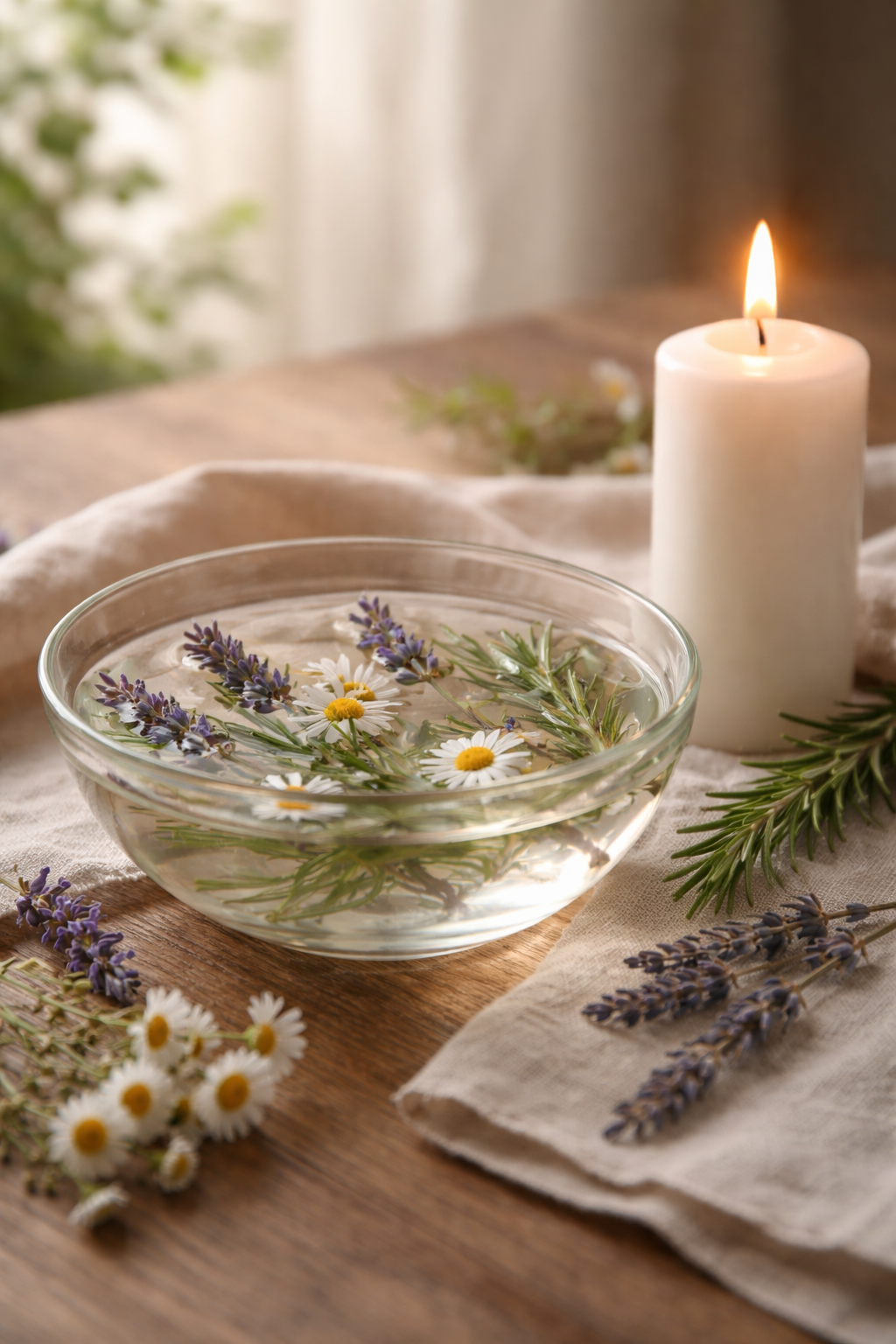
Or take a bath with lavender and rosemary – and not as a way to relax after a hard day. Consciously. With intention. Let go of something from last year that you are holding on to unnecessarily. Pain, resentment, a role that no longer suits you. Water cleanses. It's not magic, it's chemistry and psychology in one... my favorite❣
And then – go outside. To the park, to the garden, even just to the balcony. Find a quiet place, put a piece of bread or a handful of seeds on the ground as an „offering“ – and listen for a while. The sounds. The light. What resonates within you when you silence that inner chatter that never goes silent.
Seeds of intention – that’s what the ancients knew
Ostara is a time of intentions. Not New Year's resolutions that you'll forget by the end of January. Intentions planted in concrete soil, on a concrete day, with the concrete knowledge that this is the half of the year when energy grows. The old wisdom said: what you sow in the spring, you reap in the fall. Symbolically, it applies perfectly. What you pour your attention into now will grow by the fall.
A project you've been putting off. A relationship you want to invest more in. The health you gave up on in February. Spring is a moment of grace—a new beginning for those who embrace it.
And finally – because it's worth saying
No one really encourages us – women over fifty – to stop and celebrate. Celebrate transitions, seasons, changes within ourselves. Rather, they encourage us to cope, optimize, and not slow down. But we know that this is not enough. Our great-grandmothers who brought out Morana knew it. The women who first sowed the seeds knew it. All those who danced around the fire on the day of the equinox knew it – and they knew why they were doing it.
So try to take it back this year. A little bit of that knowledge. A little bit of that celebration. You don't need anything big – just stop, take a breath, and say to yourself: it's spring. The light is increasing. And I with it.

With love, Daniela
Note for our readers: Some of the links in our articles may be affiliate links (but definitely not all of them!). That means if you buy something through them, we may receive a small commission – at no extra cost to you! 💛 These little rewards help us keep the blog running: covering hosting, tools, and most importantly – the time and love we put into creating meaningful content for you. Thank you for supporting us. Every click is a sign that what we do matters.


You might also like
Úplněk ve Vodnáři 29. července: Konečně si to přiznej…
Lammas: pohanský svátek hojnosti a vděčnosti