We are losing wild bees, the guardians of life
Dear ladies, today I want to share with you some news that hurts!
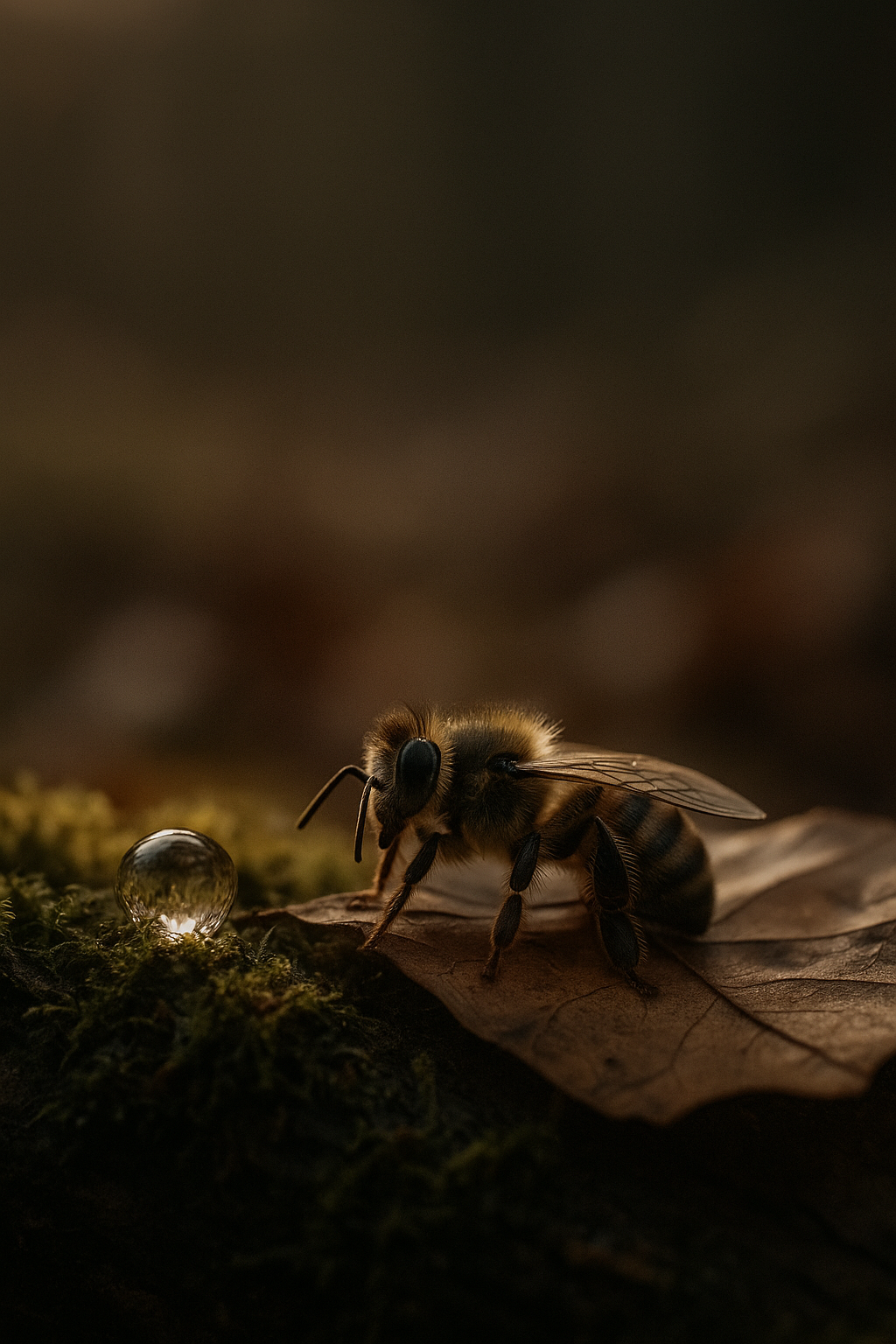
A report that speaks of the silent disappearance of the most resilient creatures in our forests – wild honey bees.
While we keep our fingers crossed for beekeepers to stop the losses in their hives, deep in the forests, bees are quietly and inconspicuously disappearing, living completely without our help, without medicine, without a beekeeper. And it is in these tiny, self-sufficient colonies, nesting in the natural cavities of old trees, that the key to saving the entire species lies.
A historic moment on the Red List
Just a few days ago, on October 11, 2025, something truly historic happened after thousands of years of coexistence. Wild populations of honey bees (Honey bee) were officially listed as endangered species within the European Union for the first time.
It's a bittersweet admission: a species we've domesticated for thousands of years is in decline in the wild. Only in the last decade have systematic studies in Germany, Ireland and other countries shown us that these bees still live in forests, but their numbers are declining dramatically.
And the decline is frighteningly rapid. A scientific model has shown that the estimated population decline is 56 percent per decade.. This means that more than half of Europe's wild bee colonies are disappearing every ten years. Their numbers are declining so rapidly that they will not be able to survive without our intervention.
Why they matter more than we think
You might be thinking, "We have beekeepers."„ But these wild bees are different. They have developed a natural ability to survive the winters, resisting the parasites and diseases that plague our farmed hives.
They are a vital genetic reservoir. Their wild genetic diversity and natural adaptations could be the key to making bees more resilient on bee farms. In other words, if we lose them, we lose an evolutionary legacy that could save the future of all honeybees.
What really disappears when they leave?
Although the statement attributed to Einstein that we would only survive four years without bees is false, the problem is serious even without apocalyptic scenarios.
We would survive, but our diet would be dramatically depleted. Bees pollinate up to 90 percent of flowering plants in Europe. If they disappeared, most fruits, many vegetables, coffee, cocoa and nuts would also disappear.
What can we do about it?
The reason for their disappearance is clear: Loss of their homes. Intensive agriculture and forestry are destroying key habitats.
The new IUCN assessment is a challenge for us all. It is time to start protecting these bees and treating them as native wildlife.
Please, let's take an interest in this. Let's ask what our foresters are doing. After all, these bees most often nest in cavities created by woodpeckers in old trees - often in beech trees. We need to start protecting old hollow trees in forests and supporting natural forests.
This is not a sentimental gesture. It is about protecting genetic potential, biodiversity and ecosystems for the future. Let's allow wild bees to continue to survive in the shade of the forest, without us, and in doing so give them a chance to save us all. Let's do something before the quiet humming in the hollows of the trees is silenced forever.
Because if wild bees disappear, part of the evolutionary heritage that has allowed them to survive for millions of years without human help will disappear with them.
Share it, talk about it, write about it. Every bee we protect today protects our future.
Because it's about more than honey. It's about life.

With love, Daniela
Note for our readers: Some of the links in our articles may be affiliate links (but definitely not all of them!). That means if you buy something through them, we may receive a small commission – at no extra cost to you! 💛 These little rewards help us keep the blog running: covering hosting, tools, and most importantly – the time and love we put into creating meaningful content for you. Thank you for supporting us. Every click is a sign that what we do matters.


You might also like
A Little Light from a Big World: The Story of the Nativity Scene✨
Friday the 13th, the black cat and the spilled salt