Patrick, snakes and our inner strength: Why celebrate March 17th!
Let's sit down for a moment, make some good tea (or pour something stronger, we're not going to lie to ourselves) and talk about Patrick.
Commercial circus
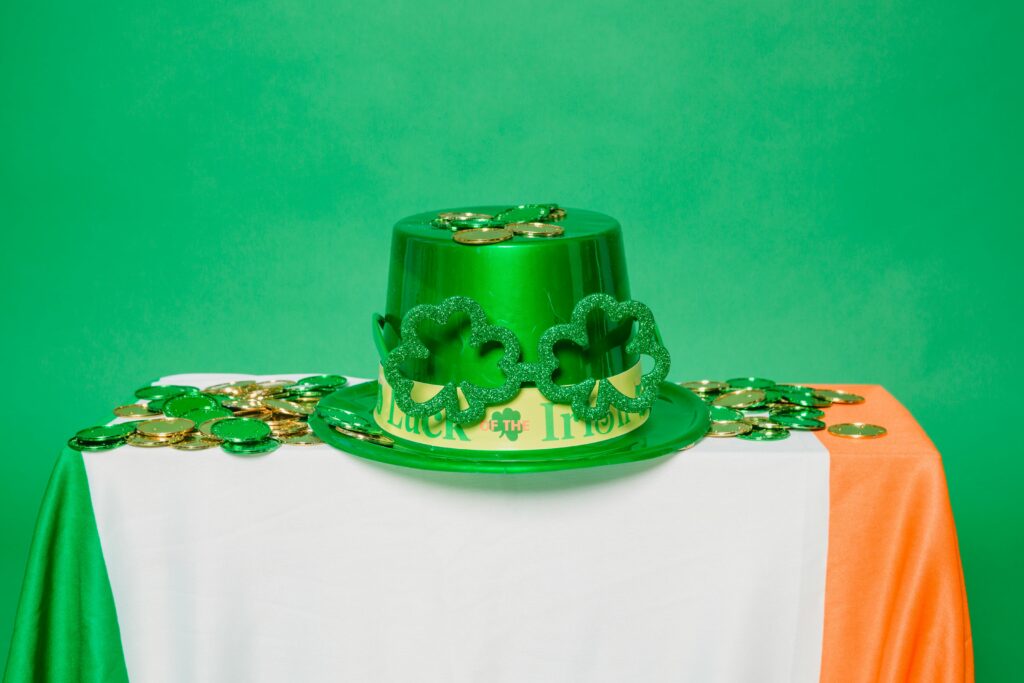
If there's one thing that's been able to get me out of my chair in recent years, it's the commercial circus it's become. Plastic shamrocks everywhere, people in horrible green wigs, and beer that looks like a dishwashing liquid. Yet beneath that layer of cheap kitsch beats the heart of something much deeper that has something to say to us, the big girls. The whole world celebrates it on March 17th, but honestly - do we even know who we're worshipping?
And girls, what will we do – Christmas, Easter, Valentine's Day, etc. are all the same 😥
Where did the myth about exorcising snakes come from?
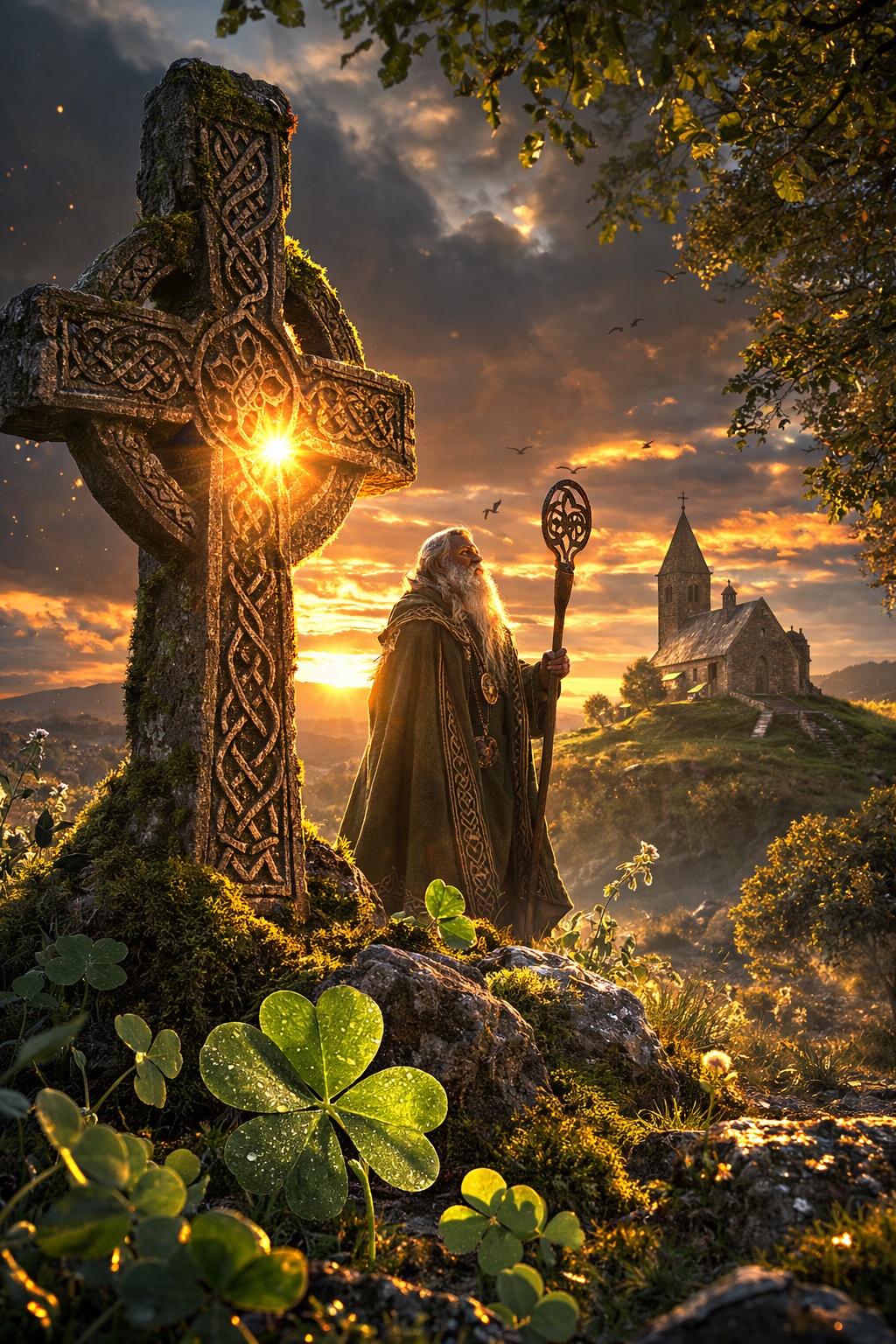
Few people know that this famous missionary was actually not no Irish, but a boy from Roman Britain -Saint Patrick (Irish Naomh Pádraig, English Saint Patrick). And those legends about how he drove snakes off the island because one attacked him while preaching? Well, let's be honest with ourselves - physically, the reptiles simply don't exist there. It's a beautiful, if a bit harsh, allegory for how Patrick, as a missionary, rid Ireland of druids and pagans. The old world of magic was replaced by Christianity. But do you know what's fascinating about it? That the Celtic roots couldn't be completely uprooted. That force of nature remained there.
The Magic Shamrock: When Faith Meets Nature
The Celts had worshipped the shamrock as a plant heralding the arrival of spring long before Patrick came along. He then cleverly used it to explain to the pagans the unity of the Holy Trinity. And it was from this combination – from an ordinary clover plucked from the grass – that it became a symbol of the whole country. There is an important lesson hidden in this for us: the energy of spring and the ability to sprout again from even the hardest soil is within us, regardless of what the tables or the calendar say.
Shamrock: A symbol that has balls (and three leaves!)
While the official symbol of Ireland is the harp, the true ruler of hearts is shamrock – the legendary shamrock. Forget the encyclopedic definitions of the shamrock, for us it is a symbol of faith, hope and love, which Saint Patrick brilliantly used as a „PowerPoint presentation“ of his time to explain the Holy Trinity to the pagans. Today, this green speck is everywhere: from national team jerseys to the Aer Lingus airline logo to that perfectly drawn footprint in the foam of your Guinness. On March 17th, you simply have to have it – whether pinned to your lapel or painted on your face. It is unofficial but absolutely ubiquitous proof that the simplest things in nature have the greatest power to unite us. And that too without scientific tables!
Forget green, Patrik was "blue"„
And then there's the color. Did you know that historically, blue has been associated with Ireland? Saint Patrick himself is most often depicted wearing blue robes, and this shade even bears his name. Green only became a symbol in the 18th century as a sign of nationalism and resistance to British rule. There's something incredibly endearing about it - they just decided that the old rules don't apply and chose the color of the "emerald island". It reminds me a bit of us. Also, no one will dictate to us what is "appropriate" for our age anymore.
From famine to pride: The force that unites us!
When I look at how the Irish stick together, how the famine scattered them all over the world and they still managed to maintain their identity, I feel a huge respect for them. The "green machine" that once interfered in politics in America was not just about drinking in bars, but about the incredible power of community. We women at our age already know that we can forget about any tinsel - what matters is what we feel inside and who we have next to us.
How to enjoy the day our way?
So when you see the crowds on March 17th, try to stop for a while. Maybe instead of that green beer, I'll treat myself to a good boiled ham, lamb or honest shepherd's pie.
I will think about how many "snakes" I have had to chase away in my life. Each of us has a piece of Patrick inside us - a woman who can stand on the top of a mountain, stay there for a symbolic 40 days and not let herself be broken.
And we don't need any plastic trinkets for this, we just need our inner, experienced strength.
Where to honor Patrick in our country: From baroque statues to dewy glass
You might be surprised that the veneration of this saint was not introduced in our country by any modern marketing, but by Count Jan Špork. Even in the famous Kuks you can find an altar with his painting, or come across his statues in Karviná or Dolní Lutyňa. But let's be honest, most of us will encounter him more at the table. On St. Patrick's Day, "everyone is a little Irish.".
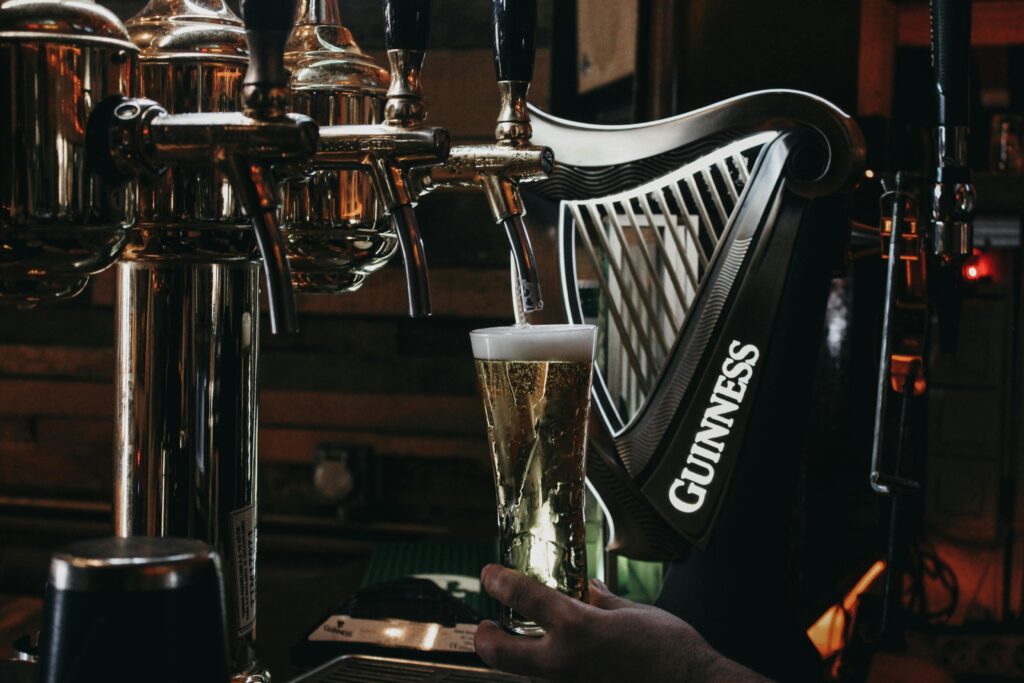
In the Czech Republic, this holiday has taken root mainly in Irish pubs, where honest dark beer or sharp whiskey is served, often accompanied by live music.. If you want to honor St. Patrick in style, ditch the green dye and go for honest food – try boiled ham, lamb, or a classic like shepherd's pie or sausages with mashed potatoes.. Because as we big girls know, any opportunity to have a glass of something good and eat well in the company of friends is simply a good opportunity.. So cheers, or as they say in Ireland – Sláinte!
My little nipple: Are we actually a little Irish too?
The truth is, we are an incredible genetic cocktail. Modern DNA tests confirm what we women have long intuitively suspected: Czechs are far from just Slavs.
Here are a few facts you can use as an argument over that coffee:
- Slavs are in the minority: Only about 100% of our population has purely "Slavic" genes (haplogroup R1a). 35 % population. That means two-thirds of us have something completely different in our blood!
- Celtic-Germanic trace: Roughly a third of Czechs carries genes that scientists refer to as Western European (haplogroup R1b). This is exactly the trace left here by the Celts (the Bojs, after whom our country is called Bohemia) and later by the Germans. So we are genetically much closer to the Irish or the French than we think.
- Crossroads of Europe: The rest is a mixed bag – from Vikings to Balkans to genes from the era of mammoth hunters. We are simply a „big European family“ in one small Czech pond.
It's also fascinating that in our women, the Celtic lineage survives longer than it seems. While the male lineages often changed as different armies swept through, the female lineages (mitochondrial DNA) have been stable for thousands of years. So yours „"inner Celtic goddess"“ He's probably really there and he's asking for a word!
Even historians today agree that when the Slavs came to us, they did not kill the original population (Celts and Germans), but simply began to live with them, mix and share experiences. So the Celtic magic, sense of nature and perhaps even a little stubbornness circulate in full force in us.

With love, Daniela
Note for our readers: Some of the links in our articles may be affiliate links (but definitely not all of them!). That means if you buy something through them, we may receive a small commission – at no extra cost to you! 💛 These little rewards help us keep the blog running: covering hosting, tools, and most importantly – the time and love we put into creating meaningful content for you. Thank you for supporting us. Every click is a sign that what we do matters.


You might also like
The Magic of Christmas Eve: A Mysterious Night Full of Wishes and Scents❣
Blood Moon, Spring Cleaning, and a Little Cosmic Slap